
Summary. Speed-to-market doesn’t fail in the shop. It fails in design. This blog explains how a disciplined Design for Manufacturability (DFM) review prevents “surprise” production delays like unformable flanges, blocked punch paths, added manual operations, tolerance-driven inspection backlogs, and assembly access issues that only appear at scale. A strong DFM process aligns teams on build intent early (volumes, critical features, datums, fastening/weld strategy, environment), then reduces steps through smarter standardization, validates tolerances against real process capability, confirms tooling and assembly access, and checks supply-chain readiness for ramp. A real example highlights the payoff: fewer post-release ECOs and stabilized build times after small design tweaks.
Want a launch that stays on schedule—read the full blog and see how DFM can protect your timeline and budget.
__________________________
The project appears to be on track.
CAD is done, prototypes passed basic testing, and the launch plan is in place.
As soon as production begins, a brake operator flags a flange that can’t form without hitting tooling. A PEM location blocks a punch path, so the team adds a manual step. A tight tolerance forces 100% inspection, so queues form at quality. Assembly takes longer because wire routing wasn’t planned around access.
It turns out that these aren’t shop problems. They are design problems that could have easily been prevented with a proper design for manufacturability (DFM) review.
Let’s walk through how DFM keeps your launch on schedule.
The Core Objective of DFM
DFM involves analyzing a design and looking for opportunities to modify it into one that can be built more efficiently, cost-effectively, and repeatably. Potential benefits include shorter lead times, fewer defects, less inspection traffic, and a smoother path from prototype to production with no compromise to required quality or performance.
With a proper DFM review, customers are protected against bottlenecks jeopardizing their projects’ timelines and costs, such as:
- Surprise manual operations added during the first production build
- Long inspection queues caused by overly tight tolerances
- Rework at fit-up because parts don’t locate consistently
- Engineering change orders (ECOs) that derail purchasing and scheduling
- Yield swings during ramp that make lead time unpredictable
Not all DFM reviews are equal
Choosing the right contract manufacturing and metal fabrication partner can be the difference between a smooth project experience and one filled with headaches. Experience matters more than anything, closely followed by team collaboration to ensure the best possible project outcome.
Let’s walk through how a proper DFM process works, step by step.
Step 1: Alignment on build intent
Build intent is the agreed-upon definition of “done” for manufacturing across all functions before a design is locked in. Without it, teams optimize in silos without regard for the overall project goal. Engineering optimizes for performance, operations optimizes for flow, and purchasing optimizes for availability. Misalignments show up later as rework, inspection overload, and schedule slip.
Ensuring alignment involves:
- Sharing target volumes and ramp stages (prototype, pilot, production)
- Identifying critical-to-function features and functional datum scheme
- Clarifying weld vs. fastener intent, including service needs
- Identifying environment needs (corrosion, vibration, heat, etc.)
Step 2: Opportunities are sought to cut steps and save production time
Speed to market often comes less from faster machines and more from fewer operations and handoffs.
In precision sheet metal fabrication, extra setups and secondary ops can add days through queue time, and every added step introduces risks for delays or defects, placing shipping dates in jeopardy.
Common measures that can be taken to minimize and control manufacturing time include:
- Reducing part count where it won’t hurt serviceability
- Standardizing hole sizes, bend radii, and common cutouts
- Avoiding features that force secondary ops (hand forming, heavy deburr)
- Standardizing hardware (PEMs, studs, screws) across the assembly
Step 3: Tolerances are validated to match function and process capability
Tight tolerances may feel safe on a drawing, but overly tight tolerances can unnecessarily drive 100% inspection in production resulting in unnecessary rejects consequently adding queue time and labor. It also increases scrap risk even though the variation is normal and harmless.
A knowledgeable and experienced DFM team will:
- Challenge tolerances that don’t drive fit, sealing, alignment, or performance.
- Use geometric dimensioning and tolerancing (GD&T) with a clear datum scheme where it adds clarity
- Set realistic flatness and perpendicularity for formed parts
- Ensure inspection access for critical features (probes, gauges)
Step 4: Shop constraints and assembly access are validated
Basic CAD reviews often don’t reveal collisions and access problems. A competent contract manufacturer checks for tooling clearance, insertion access, weld approach, and the actual assembly sequence, especially when electromechanical assemblies are involved. If the part can’t be built as drawn, teams add manual steps or redesign late. Both cost time and destabilize lead time.
Validation involves:
- Checking bend feasibility (minimum flange, reliefs, collision risks)
- Confirming weld access, distortion risk, and fixture needs
- Planning wire routing, strain relief, and driver access
Step 5: Supply chain and production readiness are verified
DFM doesn’t stop at the part. It includes considerations for material, finish, hardware availability, and the plan from prototype to production. A knowledgeable and experienced contract manufacturer and metal fabricator knows that a launch can fail even with a perfect design if the supply chain can’t support the ramp.
The readiness phase includes:
- Confirming material availability and acceptable alternates
- Validating finish options and lead times (powder coat, plating, anodize)
- Standardizing to stocked hardware where possible
- Defining a pilot build plan that proves the process before scaling
…
An example scenario
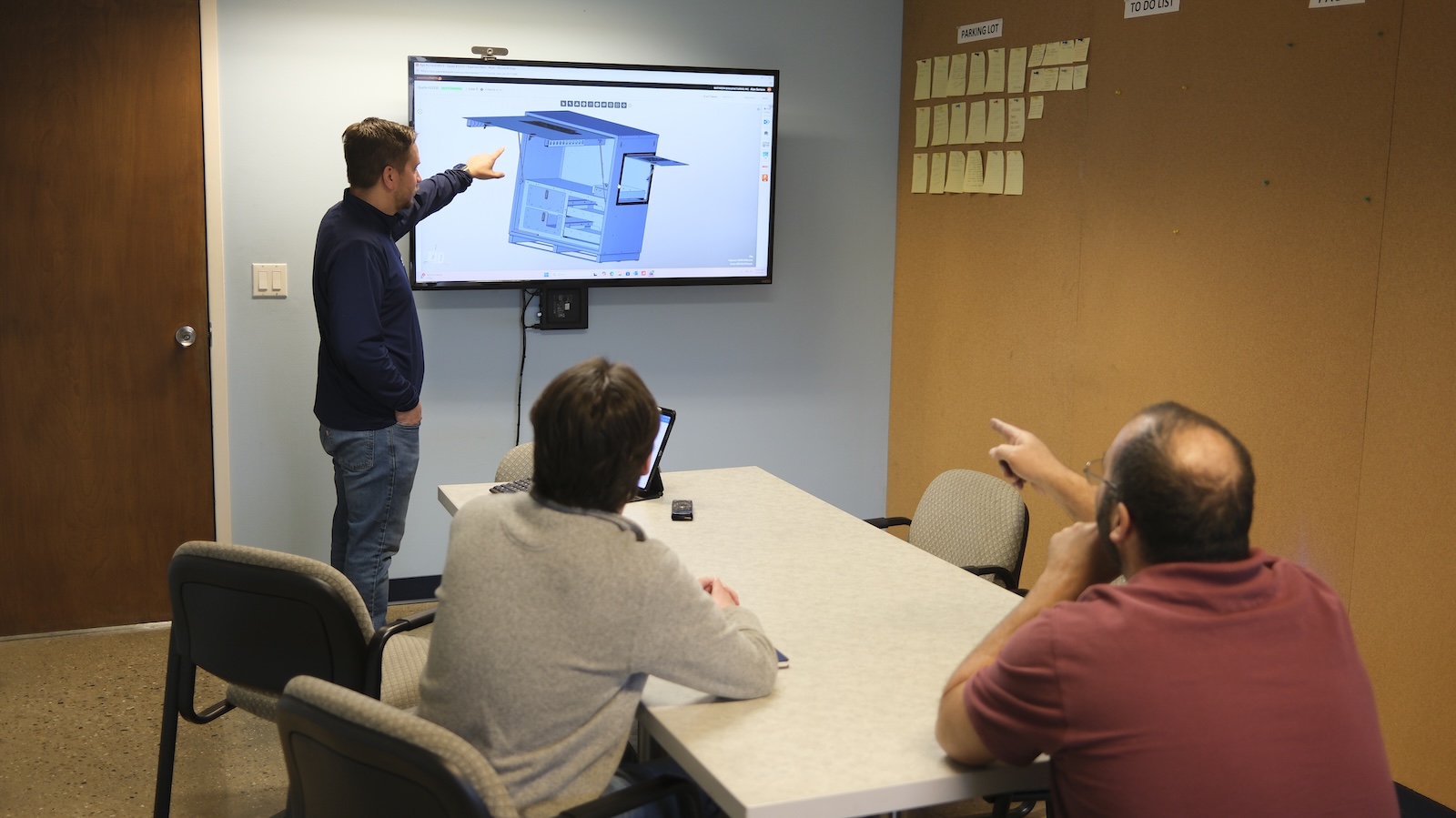
A mid-sized OEM planned to launch a sheet metal enclosure with a small wiring subassembly. Pilot units passed basic checks, but production trials revealed fit-up rework, slow PEM installation, and inconsistent assembly time.
The OEM and contract manufacturer ran a structured DFM review with shop and assembly input. They ended up relaxing non-critical tolerances driving inspection queues, standardized PEM hardware, moved two PEM locations for tooling access, added a simple locator feature, and updated the assembly sequence to improve wiring access.
The result
Post-release engineering change orders were reduced by ~50% in the first month, and build time was stabilized because fewer units needed manual correction. Quality improved because inspection focused on the true critical features.
…
FAQs
What is DFM, in plain language?
DFM is a review that checks whether your design can be built efficiently and repeatably. It focuses on real processes, not ideal CAD. It aims to prevent late rework, inspection queues, and manual workarounds.
When should DFM happen for a launch?
Before drawings freeze and before long-lead purchases. The earlier you run it, the cheaper the changes are.
How do we know a contract manufacturer is competent in DFM?
They ask for build intent, volumes, and critical features up front, and share documented feedback. They also explain tradeoffs tied to lead time, yield, or quality.
Is DFM only for high volume?
No. Low- to mid-volume may benefit even more because you can’t hide inefficiency with scale.
What should we bring to a DFM review?
3D models, preliminary prints, target volumes, a first-pass bill of materials, and the intended assembly sequence.
Does DFM mean we have to redesign everything?
Not usually. However, small changes may be required to optimize the project, such as moving a PEM, relaxing a tolerance, adding a locator, or improving access.
…
At Mathison Manufacturing, we have a proven and optimized DFM process that has collectively saved our customers millions of dollars in production costs, often shortening their ship dates beyond expectations.
We would love the opportunity to walk you through our DFM review process so that you may understand why Mathison Manufacturing, founded in 1959, is a leading contract manufacturing and metal fabrication company.
__________________________
About Mathison Manufacturing
Founded in 1959, Mathison Manufacturing is a trusted partner in precision contract manufacturing, specializing in tight-tolerance sheet metal fabrication, electromechanical assemblies, and complex, high-end solutions. Known for exceptional craftsmanship, responsive service, and a customer-first mindset, Mathison is dedicated to delivering quality products and building lasting partnerships that help customers grow.
Let’s work together on your next project! Contact us today!