Welcome to Our Blog

A plant manager approves a new control box design after several rounds of design reviews and drawing updates. The metal enclosure looks right. The harness fits in the drawing. The components arrive on schedule. Check. Check. Check. But soon after assembly begins, problems start to show: • A connector sits too close to a bend. • A wire route blocks access to a fastener. • Inspection catches inconsistent torque values. Consequently, the first small run ships late, and the team assesses whether the design, sourcing, or assembly plan caused the delay. This is exactly the kind of problem the future of electromechanical assemblies is moving away from. In plain terms, the future will focus on fewer handoffs, earlier collaboration, and better control before production starts, versus disconnected quoting, late-stage design changes, reactive sourcing, and quality issues discovered only after assembly is underway. How can industrial teams prepare? It starts with staying current on how contract manufacturers approach electromechanical assemblies. Electromechanical assemblies combine fabricated metal parts, wiring, controls, hardware, and tested subassemblies into a finished product or larger system. Because these assemblies depend on several connected production steps, a small issue in one area can lead to large problems in others. For example, a sheet metal change can affect wiring access, or a component substitution can affect fit, testing, or lead time. When design, sourcing, fabrication, and assembly are not aligned, lead time grows, inspection takes longer, and schedule risk increases. The future of electromechanical assemblies is not simply about automation, software, robotics, or newer equipment. Rather, it is about building assemblies that are easier to produce, inspect, scale, and support. What to look for in an assembly partner A strong electromechanical assembly partner brings more than labor capacity. They bring practical build experience, sourcing awareness, fabrication knowledge, and the ability to spot issues before they become production delays. When experience combines with technical expertise, intuition enters the picture. That intuition helps teams identify risks that may not be obvious on the drawing but could affect production, quality, delivery, or cost. A strong electromechanical assembly partner possesses the following qualities: They design for the build, not just the drawing Clean drawings do not always lead to clean builds. Poor choices around access, bend locations, wire routing, and fastener placement can slow production. Early manufacturing input reduces surprises before parts reach the floor. A strong partner will: • Review assembly sequences before release • Check tool access around brackets, panels, and connectors • Confirm wire paths before cutting metal • Identify features that may drive rework The best time to assess assembly risk is before the first purchase order. Small design adjustments can reduce hours of fitting later. A practical example: A control enclosure design moves a terminal block two inches to improve hand clearance during wiring. This simple change reduces assembly strain and makes inspection faster. They treat fabrication and assembly as one process Many teams still quote fabricated parts and electromechanical assembly as separate jobs, which creates unnecessary gaps. For example, an enclosure may meet print, but the full assembly may still be hard to wire, test, or package. A strong partner will: • Review sheet metal, hardware, and wiring together • Confirm part finishes before assembly planning • Align tolerances with real functional needs • Build a shared manufacturing traveler or work instruction Connected planning reduces handoffs and helps prevent quality issues from surfacing during final assembly. A practical example: A bracket tolerance looks acceptable in isolation, but it creates connector alignment problems after powder coating. Reviewing the full assembly would have identified the risk before production. They build supply chain flexibility into the bill of materials (BOM) Successful electromechanical assemblies depend on all components working together, from fabricated metal parts and hardware to wiring, controls, labels, and purchased items. However, when a critical part is unavailable, substituted, or changed late in the process, it introduces supply chain issues that can threaten the entire project’s success and feasibility. A strong partner will: • Identify long-lead parts early • Approve alternates where possible • Separate critical components from common hardware • Review supplier risk before launch A solid assembly plan cannot eliminate every component delay, but a solid BOM discipline helps reduce risk and protect delivery dates. A practical example: A team approves two equivalent cable gland options before production starts so that purchasing can react faster if one option becomes unavailable. They implement quality checks upstream Electromechanical assemblies need checks during fabrication, wiring, fastening, labeling, and testing. Waiting until final inspection to identify issues is a risky and costly proposition. Upstream quality control reduces rework and protects customer confidence. A strong partner will: • Define inspection points by build stage • Verify torque, continuity, fit, and labeling early • Use photos or samples for visual standards • Document test requirements before production Early checks reduce the cost of defects and prevent teams from unnecessarily disassembling finished units to fix hidden issues. A practical example: During a first-run build of a control cabinet, the team verifies wire labels, terminal locations, torque values, and connector orientation before installing the inner panel into the enclosure. They ensure repeatability before scaling A prototype can pass inspection and still be difficult to build repeatedly at production pace. The future of contract manufacturing favors teams that turn one successful build into a consistent, documented process. A strong partner will: • Document the best assembly sequence • Use fixture where alignment matters • Standardize labels, routing, and hardware • Review first-run issues before the next release Repeatability protects margin, delivery performance, and customer trust while reducing dependence on tribal knowledge. A practical example: After assembling the first batch of ten units, the team updates work instructions with better wire routing photos, enabling new assemblers to follow the same process with minimal variation. FAQ What makes electromechanical assemblies more complex than basic fabrication? Electromechanical assemblies combine fabricated parts, purchased components, and wiring. A part can meet print and still create problems during assembly, which is why early planning is critical. Does every assembly need formal testing? Not every assembly needs full functional testing, but every assembly should have clear acceptance criteria. Depending on the application, that may include continuity checks, torque verification, visual inspection, labeling verification, fit checks, or functional testing. How can my contract manufacturer reduce supply chain risk? They start with the BOM by identifying long-lead and single-source items early. Alternatives should be suggested where the design allows it. What role does sheet metal design play? It plays a major role. Bend locations, hole placement, tolerances, and finish can all affect wiring and final fit. Precision contract manufacturing works best when fabrication and assembly are planned together. How do we know the process is ready to scale? The process is ready when your partner can repeat the build with clear instructions, stable quality, and fewer shop-floor questions. Final Thoughts Finding the right partner matters, and working with one that understands both precision sheet metal fabrication and electromechanical assembly can be critical to your project's success. That combined knowledge improves manufacturability, reduces rework, and moves you from first build to repeatable production with fewer surprises. Consider Mathison Manufacturing for your electromechanical assembly needs. Founded in 1959, we have successfully executed countless assembly projects for a wide range of clients who rely on us time and time again because of our experience, expertise, and end-to-end knowledge of the assembly process.
May 8, 2026

The Future of Electromechanical Assemblies: What to Look for in a Partner

Summary. Electromechanical assemblies are moving toward earlier collaboration, fewer handoffs, and stronger production control before work reaches the shop floor. The article explains how small design, sourcing, or assembly oversights—such as poor wire routing, tight connector placement, or inconsistent torque—can delay production and increase rework. A strong assembly partner helps prevent these issues by reviewing designs for real-world buildability, treating...
A plant manager approves a new control box design after several rounds of design reviews and drawing updates. The metal enclosure looks right. The harness fits in the drawing. The components arrive on schedule. Check. Check. Check. But soon after assembly begins, problems start to show: • A connector sits too close to a bend. • A wire route blocks access to a fastener. • Inspection catches inconsistent torque values. Consequently, the first small run ships late, and the team assesses whether the design, sourcing, or assembly plan caused the delay. This is exactly the kind of problem the future of electromechanical assemblies is moving away from. In plain terms, the future will focus on fewer handoffs, earlier collaboration, and better control before production starts, versus disconnected quoting, late-stage design changes, reactive sourcing, and quality issues discovered only after assembly is underway. How can industrial teams prepare? It starts with staying current on how contract manufacturers approach electromechanical assemblies. Electromechanical assemblies combine fabricated metal parts, wiring, controls, hardware, and tested subassemblies into a finished product or larger system. Because these assemblies depend on several connected production steps, a small issue in one area can lead to large problems in others. For example, a sheet metal change can affect wiring access, or a component substitution can affect fit, testing, or lead time. When design, sourcing, fabrication, and assembly are not aligned, lead time grows, inspection takes longer, and schedule risk increases. The future of electromechanical assemblies is not simply about automation, software, robotics, or newer equipment. Rather, it is about building assemblies that are easier to produce, inspect, scale, and support. What to look for in an assembly partner A strong electromechanical assembly partner brings more than labor capacity. They bring practical build experience, sourcing awareness, fabrication knowledge, and the ability to spot issues before they become production delays. When experience combines with technical expertise, intuition enters the picture. That intuition helps teams identify risks that may not be obvious on the drawing but could affect production, quality, delivery, or cost. A strong electromechanical assembly partner possesses the following qualities: They design for the build, not just the drawing Clean drawings do not always lead to clean builds. Poor choices around access, bend locations, wire routing, and fastener placement can slow production. Early manufacturing input reduces surprises before parts reach the floor. A strong partner will: • Review assembly sequences before release • Check tool access around brackets, panels, and connectors • Confirm wire paths before cutting metal • Identify features that may drive rework The best time to assess assembly risk is before the first purchase order. Small design adjustments can reduce hours of fitting later. A practical example: A control enclosure design moves a terminal block two inches to improve hand clearance during wiring. This simple change reduces assembly strain and makes inspection faster. They treat fabrication and assembly as one process Many teams still quote fabricated parts and electromechanical assembly as separate jobs, which creates unnecessary gaps. For example, an enclosure may meet print, but the full assembly may still be hard to wire, test, or package. A strong partner will: • Review sheet metal, hardware, and wiring together • Confirm part finishes before assembly planning • Align tolerances with real functional needs • Build a shared manufacturing traveler or work instruction Connected planning reduces handoffs and helps prevent quality issues from surfacing during final assembly. A practical example: A bracket tolerance looks acceptable in isolation, but it creates connector alignment problems after powder coating. Reviewing the full assembly would have identified the risk before production. They build supply chain flexibility into the bill of materials (BOM) Successful electromechanical assemblies depend on all components working together, from fabricated metal parts and hardware to wiring, controls, labels, and purchased items. However, when a critical part is unavailable, substituted, or changed late in the process, it introduces supply chain issues that can threaten the entire project’s success and feasibility. A strong partner will: • Identify long-lead parts early • Approve alternates where possible • Separate critical components from common hardware • Review supplier risk before launch A solid assembly plan cannot eliminate every component delay, but a solid BOM discipline helps reduce risk and protect delivery dates. A practical example: A team approves two equivalent cable gland options before production starts so that purchasing can react faster if one option becomes unavailable. They implement quality checks upstream Electromechanical assemblies need checks during fabrication, wiring, fastening, labeling, and testing. Waiting until final inspection to identify issues is a risky and costly proposition. Upstream quality control reduces rework and protects customer confidence. A strong partner will: • Define inspection points by build stage • Verify torque, continuity, fit, and labeling early • Use photos or samples for visual standards • Document test requirements before production Early checks reduce the cost of defects and prevent teams from unnecessarily disassembling finished units to fix hidden issues. A practical example: During a first-run build of a control cabinet, the team verifies wire labels, terminal locations, torque values, and connector orientation before installing the inner panel into the enclosure. They ensure repeatability before scaling A prototype can pass inspection and still be difficult to build repeatedly at production pace. The future of contract manufacturing favors teams that turn one successful build into a consistent, documented process. A strong partner will: • Document the best assembly sequence • Use fixture where alignment matters • Standardize labels, routing, and hardware • Review first-run issues before the next release Repeatability protects margin, delivery performance, and customer trust while reducing dependence on tribal knowledge. A practical example: After assembling the first batch of ten units, the team updates work instructions with better wire routing photos, enabling new assemblers to follow the same process with minimal variation. FAQ What makes electromechanical assemblies more complex than basic fabrication? Electromechanical assemblies combine fabricated parts, purchased components, and wiring. A part can meet print and still create problems during assembly, which is why early planning is critical. Does every assembly need formal testing? Not every assembly needs full functional testing, but every assembly should have clear acceptance criteria. Depending on the application, that may include continuity checks, torque verification, visual inspection, labeling verification, fit checks, or functional testing. How can my contract manufacturer reduce supply chain risk? They start with the BOM by identifying long-lead and single-source items early. Alternatives should be suggested where the design allows it. What role does sheet metal design play? It plays a major role. Bend locations, hole placement, tolerances, and finish can all affect wiring and final fit. Precision contract manufacturing works best when fabrication and assembly are planned together. How do we know the process is ready to scale? The process is ready when your partner can repeat the build with clear instructions, stable quality, and fewer shop-floor questions. Final Thoughts Finding the right partner matters, and working with one that understands both precision sheet metal fabrication and electromechanical assembly can be critical to your project's success. That combined knowledge improves manufacturability, reduces rework, and moves you from first build to repeatable production with fewer surprises. Consider Mathison Manufacturing for your electromechanical assembly needs. Founded in 1959, we have successfully executed countless assembly projects for a wide range of clients who rely on us time and time again because of our experience, expertise, and end-to-end knowledge of the assembly process.
May 8, 2026

The Future of Electromechanical Assemblies: What to Look for in a Partner

Summary. Electromechanical assemblies are moving toward earlier collaboration, fewer handoffs, and stronger production control before work reaches the shop floor. The article explains how small design, sourcing, or assembly oversights—such as poor wire routing, tight connector placement, or inconsistent torque—can delay production and increase rework. A strong assembly partner helps prevent these issues by reviewing designs for real-world buildability, treating...
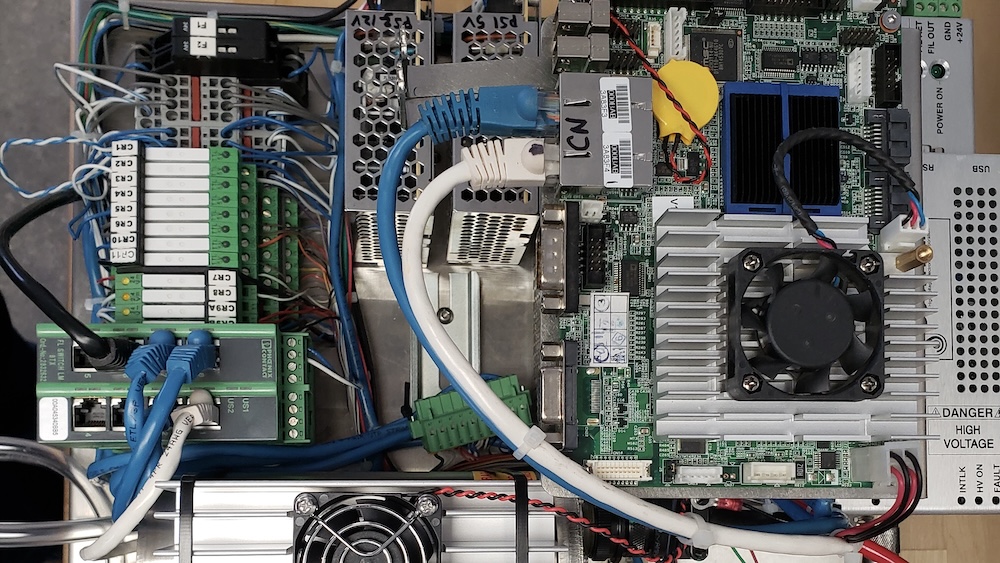
Open electronics control cabinet showing a circuit board with cooling fan and heat sinks, bundled wiring, Ethernet cables, terminal blocks, and power modules.
March 26, 2026

Why Tight Tolerances Matter in Mission-Critical Applications

Summary. Tight tolerances matter in mission-critical manufacturing because even small, acceptable dimensional variations can stack up into serious assembly, fit, reliability, and performance problems. The blog explains how success comes not from tightening every feature, but from controlling the dimensions that truly impact fit, sealing, alignment, load path, and electrical connection. It recommends a practical five-step strategy: identify critical features,...
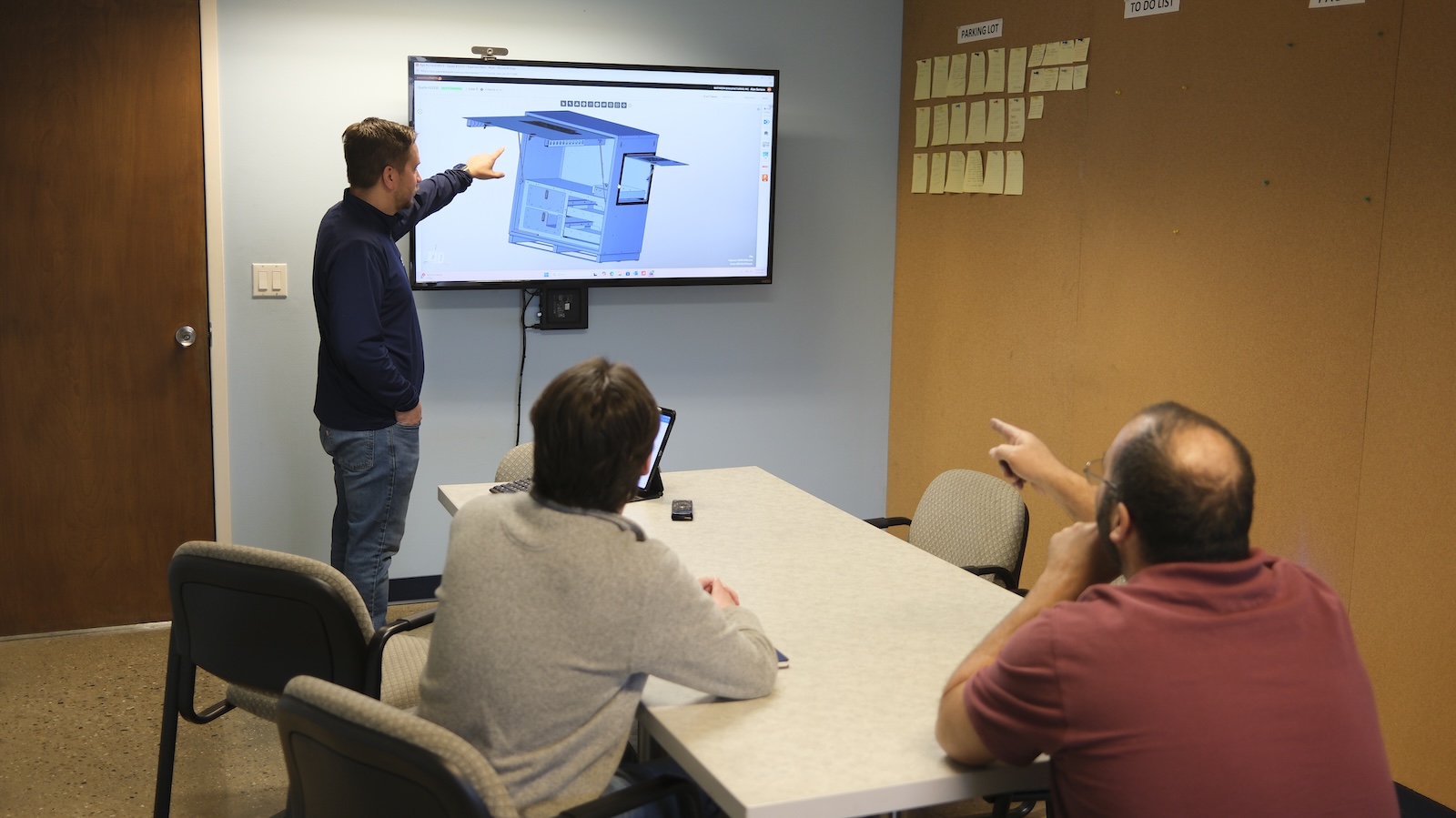
Person points at a wall-mounted screen showing a 3D CAD model while two colleagues sit at a conference table watching.
March 6, 2026

Speed to Market Starts With Design: How DFM Can Make or Break Your Launch

Summary. Speed-to-market doesn’t fail in the shop. It fails in design. This blog explains how a disciplined Design for Manufacturability (DFM) review prevents “surprise” production delays like unformable flanges, blocked punch paths, added manual operations, tolerance-driven inspection backlogs, and assembly access issues that only appear at scale. A strong DFM process aligns teams on build intent early (volumes, critical features,...
Green recycling symbol over a grayscale background of piled metal scraps.
February 6, 2026

How a Sustainable Contract Manufacturer Will Drive Customer Loyalty, and Improve Margins

Summary. OEMs are increasingly required to prove their products are built by sustainable suppliers—complete with data on scrap, energy use, recycling, and packaging. When a contract manufacturer can’t provide this, projects, margins, and customer trust are all at risk. The blog shows how to turn your sustainability goals into clear supplier requirements, evaluate scrap and energy practices, scrutinize packaging and...
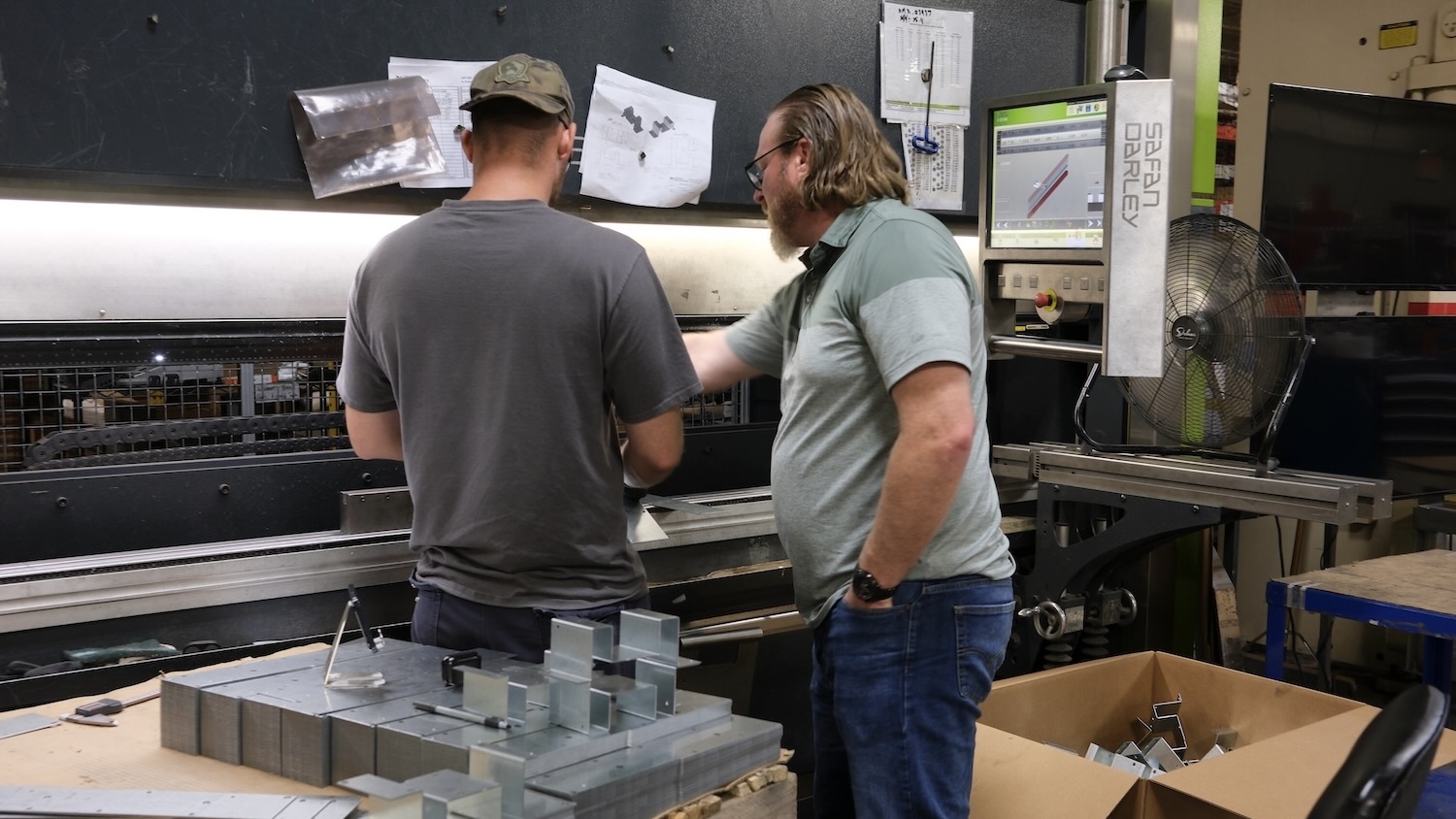
Two workers discuss a metal bending machine beside stacked metal parts in a fabrication workshop.
January 10, 2026

From Sketch to Solution: How Engineering Expertise Solves the ‘Impossible’

Summary. This is the story of a complex idea brought to life through collaboration and creative engineering. It begins with a rough sketch of a surgical device housing that seemed impossible to manufacture. But when the customer partnered with a reputable precision contract manufacturer, they embarked on a journey from concept to production, overcoming design hurdles, material challenges, and tight...
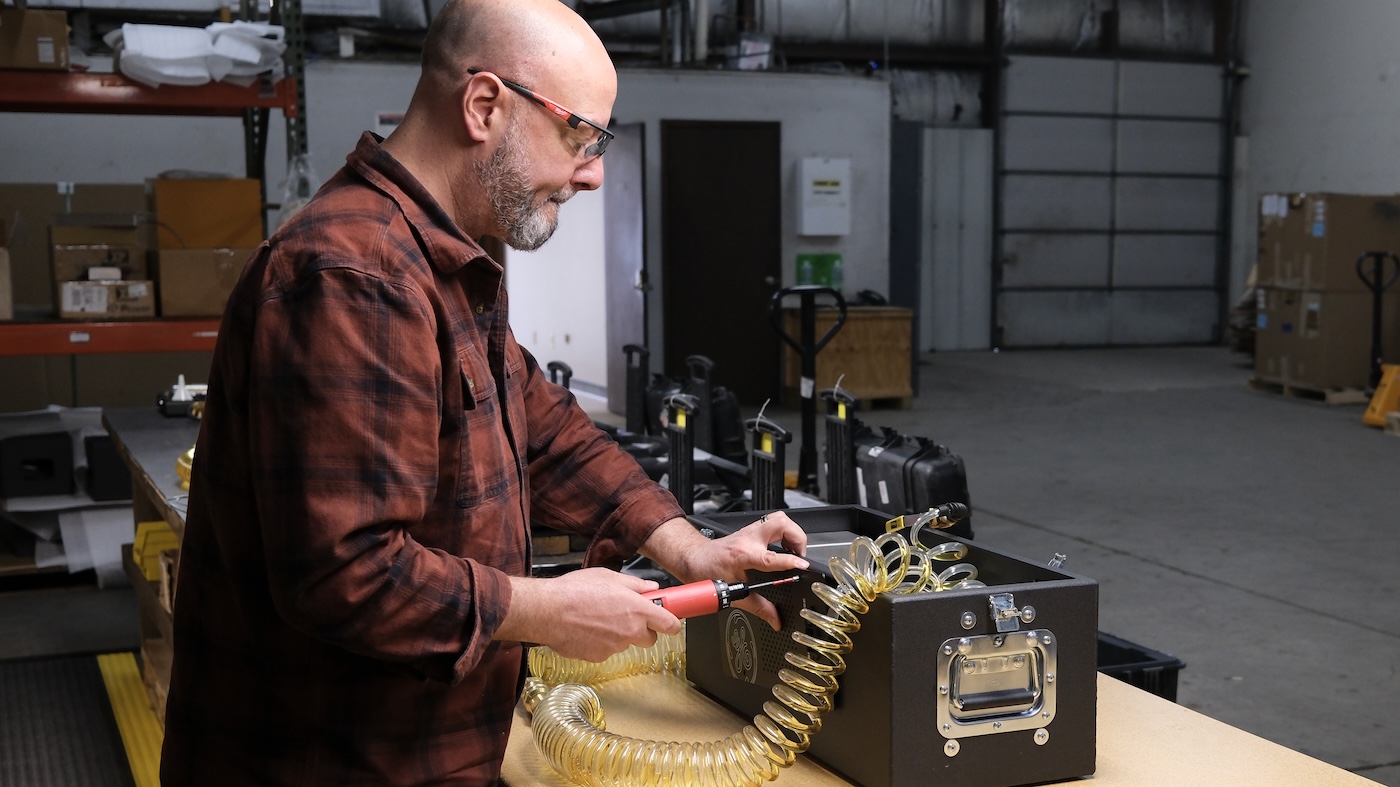
A man wearing safety glasses uses a screwdriver to assemble a black equipment case with a coiled yellow hose attached.
December 4, 2025

Contract Assembly: A Smart Path to Profitability for OEMs

Summary. Contract assembly is the outsourcing of product assembly to a third-party manufacturer who integrates customer-supplied or internally produced components into finished or semi-finished units. This practice allows OEMs to offload labor-intensive, repetitive tasks and redirect internal resources to higher-value activities like machining, fabrication, engineering, and system-level builds. Commonly outsourced assemblies include wiring harnesses, mechanical subassemblies, enclosures, and kitted modules....
Jimmy Hansen works at a computer in an office with papers, binders, and printed schedules around his desk.
November 7, 2025

Why Typical Customer Service is Not Good Enough in Contract Manufacturing

Summary. Traditional customer service practices are no longer sufficient in contract manufacturing. While many companies offer similar capabilities in metal fabrication and manufacturing, only a few embody a truly customer-centric culture—one that prioritizes the client’s goals with unwavering dedication, responsiveness, and partnership. This article emphasizes that exceptional contract manufacturing partners go beyond just delivering services; they live and breathe a...
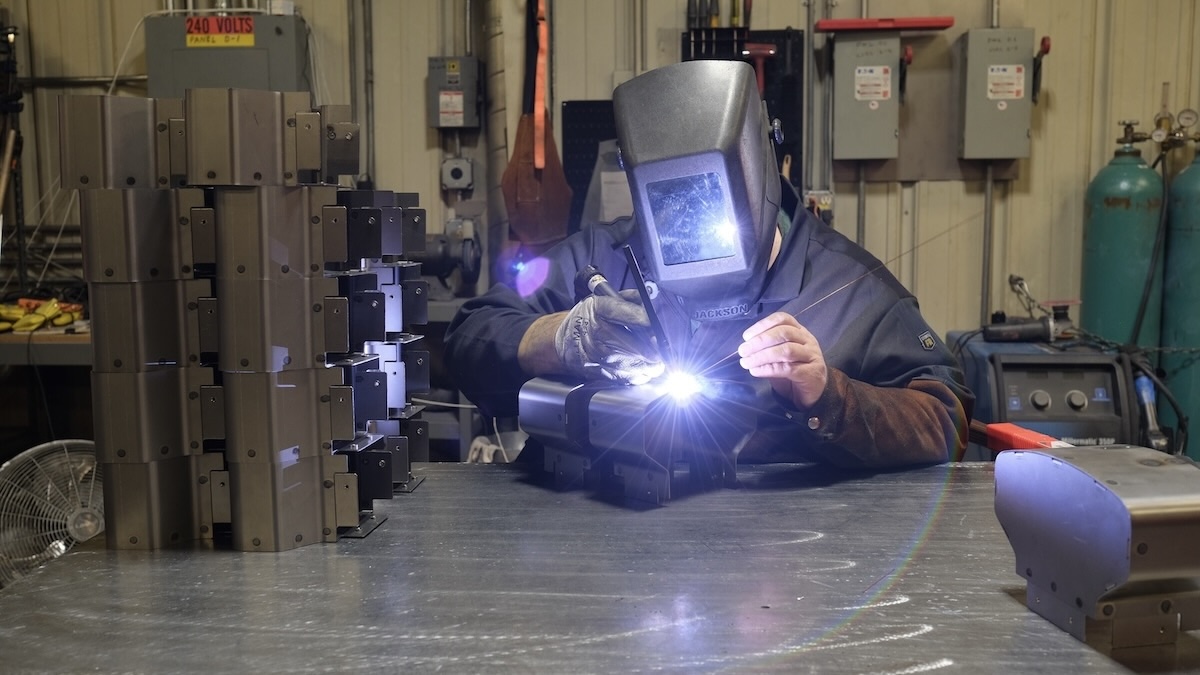
A welder wearing a protective helmet works on a metal component, creating a bright welding arc on a workshop table.
October 13, 2025

High-Mix, Low-Volume Manufacturing: Filling the Gap Between One-Offs and OEM Runs

Summary. High-mix, low-volume (HMLV) manufacturing bridges the gap between one-off prototyping and high-volume OEM production, offering flexibility, speed, and customization for businesses needing short-run manufacturing. HMLV enables frequent product changeovers, small batch sizes, and rapid design iterations, making it ideal for industries like medical technology, bioscience, and mobile hydraulics where agility is key. It supports OEMs needing specialized subassemblies, engineers...

A brightly lit container port at night with cargo cranes, stacked shipping containers, and a ship docked along the water.
September 5, 2025

Seven Ways You Can Protect Your Margins and Control Production Costs During a Tariff Turbulence

Summary. In the face of tariff-related cost uncertainty, especially in metal fabrication, companies must strategically control costs of production without compromising quality. This blog outlines seven practical strategies for controlling costs and protecting margins. First, partnering with U.S.-based contract manufacturers helps avoid tariffs and customs delays. Second, using alternative, cost-effective materials can reduce expenses while maintaining performance. Third, design simplification...
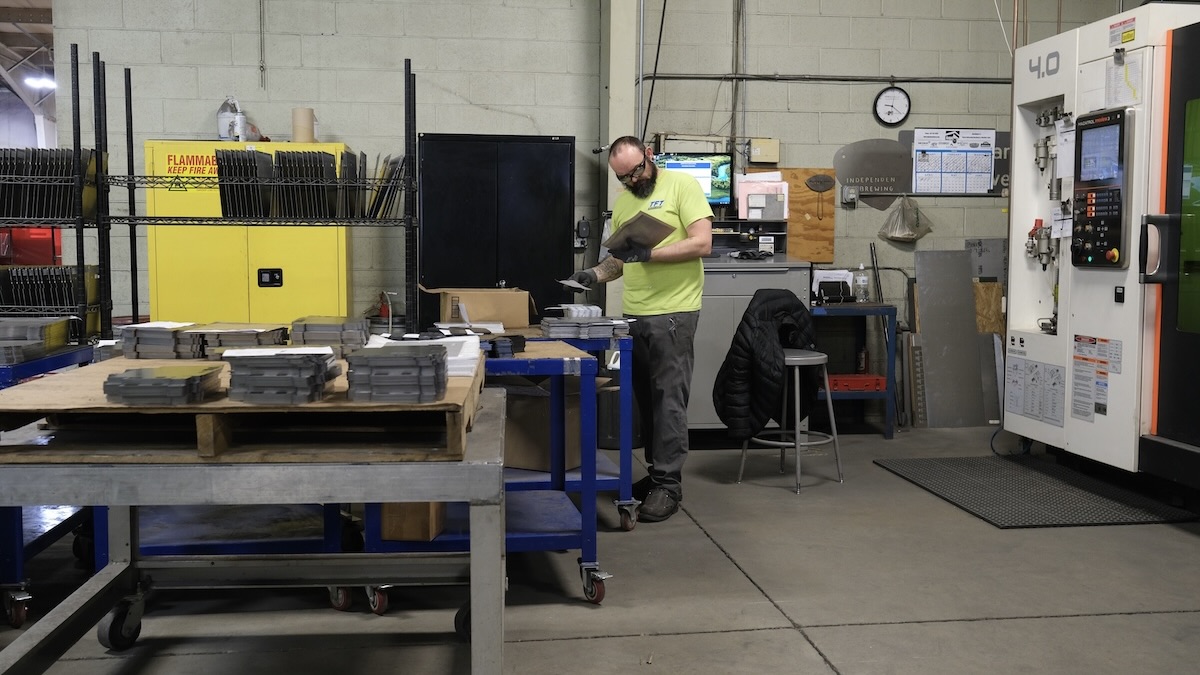
A worker in safety glasses inspects stacked metal parts beside a large industrial machine in a manufacturing shop.
August 4, 2025

Design for Manufacturability: What Engineers Should Know Before Requesting a Quote

Summary. Design for Manufacturability (DFM) is critical for achieving efficient, cost-effective results in custom metal fabrication and precision manufacturing. In the blog Design for Manufacturability: What Engineers Should Know Before Requesting a Quote, engineers will learn how to optimize their designs before reaching out for pricing. Common pitfalls—such as unclear drawings, overly tight tolerances, complex weldments, and nonstandard materials—can lead...
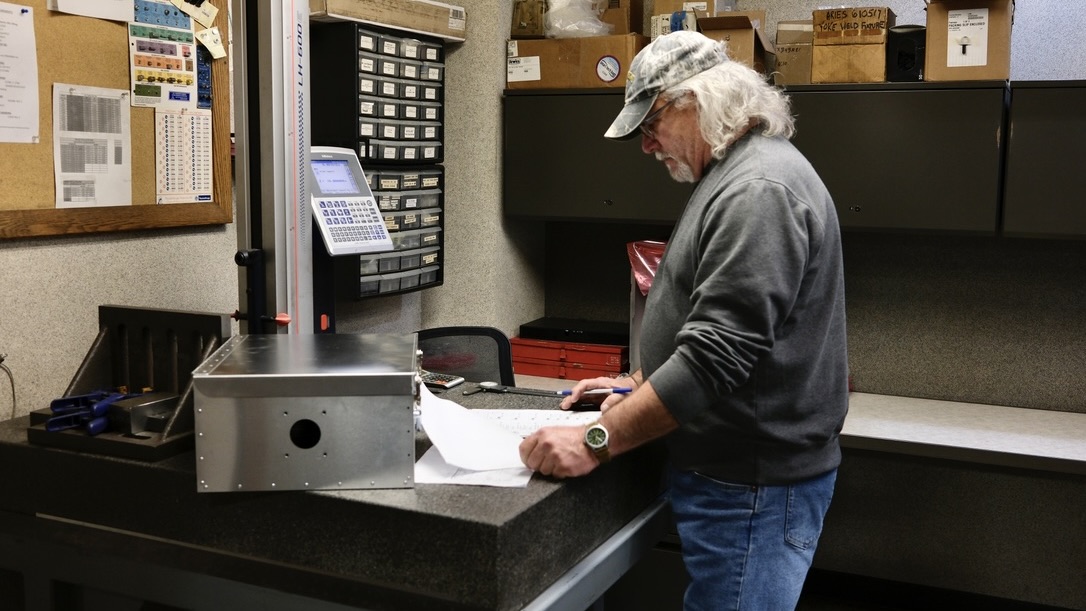
A man reviews paperwork beside a measuring machine and metal enclosure in a workshop inspection area.
July 4, 2025

What Most People Get Wrong About Manufacturing Lead Times — and What You Can Do About It

Summary. Lead time is more than just production time—it’s the total duration from order placement to delivery, and misunderstanding it can disrupt scheduling, cash flow, and customer satisfaction. Many assume lead times are consistent or that shorter always means more expensive, but that’s not always true. Variables like procurement delays, design revisions, and the need for turnkey services all impact...
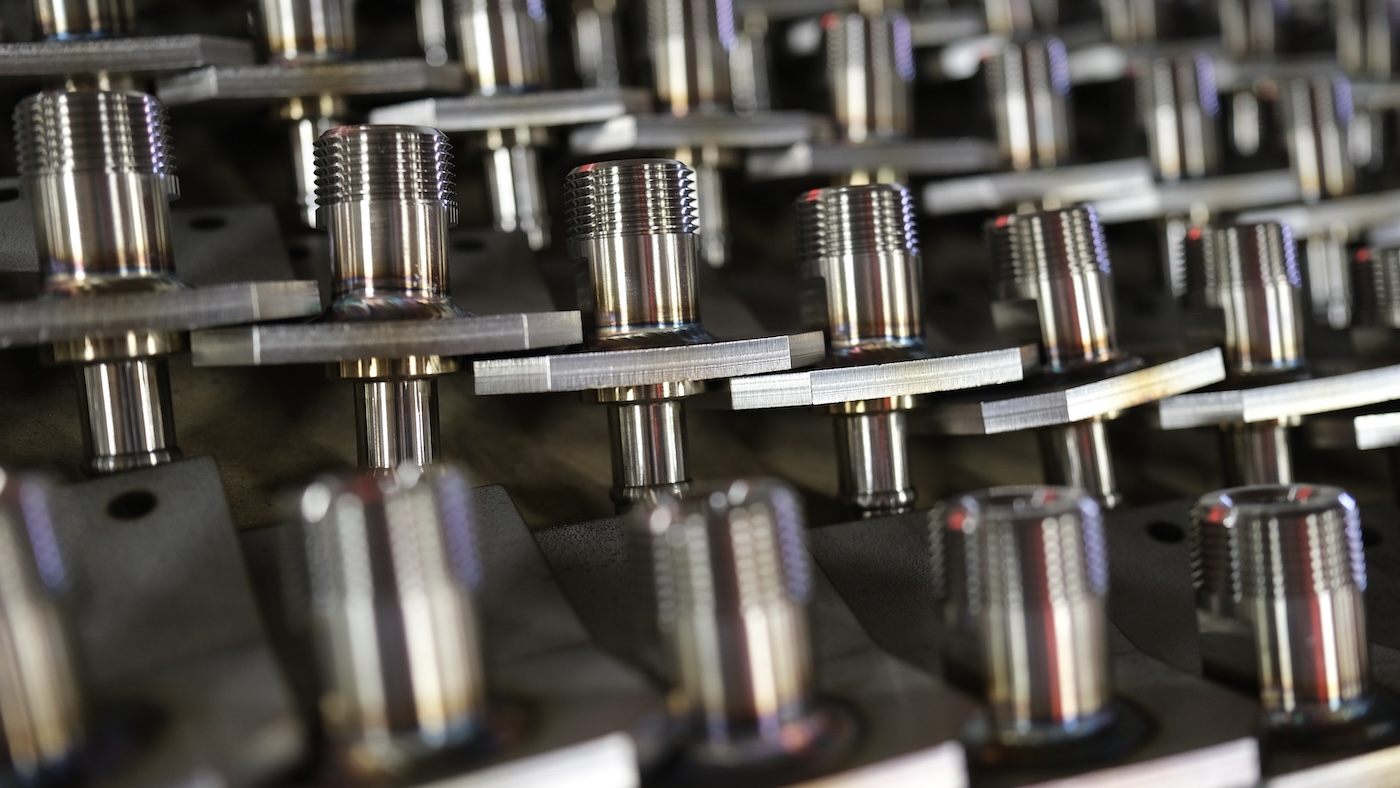
Rows of polished threaded metal fittings attached to flat brackets are arranged in a manufacturing workspace.
June 6, 2025

Why Specialty Welding is Critical in the Medical and Food Industries

Summary. In industries like medical and food processing, “almost perfect” isn’t acceptable. Equipment must meet stringent standards for safety, cleanliness, and aesthetics—especially at welded joints. In medical device manufacturing, welds must withstand repeated sterilization, be biocompatible, and appear flawless in patient-facing environments. Food processing equipment requires welds free of pits and gaps that could trap bacteria, while also meeting FDA...
A plant manager approves a new control box design after several rounds of design reviews and drawing updates. The metal enclosure looks right. The harness fits in the drawing. The components arrive on schedule. Check. Check. Check. But soon after assembly begins, problems start to show: • A connector sits too close to a bend. • A wire route blocks access to a fastener. • Inspection catches inconsistent torque values. Consequently, the first small run ships late, and the team assesses whether the design, sourcing, or assembly plan caused the delay. This is exactly the kind of problem the future of electromechanical assemblies is moving away from. In plain terms, the future will focus on fewer handoffs, earlier collaboration, and better control before production starts, versus disconnected quoting, late-stage design changes, reactive sourcing, and quality issues discovered only after assembly is underway. How can industrial teams prepare? It starts with staying current on how contract manufacturers approach electromechanical assemblies. Electromechanical assemblies combine fabricated metal parts, wiring, controls, hardware, and tested subassemblies into a finished product or larger system. Because these assemblies depend on several connected production steps, a small issue in one area can lead to large problems in others. For example, a sheet metal change can affect wiring access, or a component substitution can affect fit, testing, or lead time. When design, sourcing, fabrication, and assembly are not aligned, lead time grows, inspection takes longer, and schedule risk increases. The future of electromechanical assemblies is not simply about automation, software, robotics, or newer equipment. Rather, it is about building assemblies that are easier to produce, inspect, scale, and support. What to look for in an assembly partner A strong electromechanical assembly partner brings more than labor capacity. They bring practical build experience, sourcing awareness, fabrication knowledge, and the ability to spot issues before they become production delays. When experience combines with technical expertise, intuition enters the picture. That intuition helps teams identify risks that may not be obvious on the drawing but could affect production, quality, delivery, or cost. A strong electromechanical assembly partner possesses the following qualities: They design for the build, not just the drawing Clean drawings do not always lead to clean builds. Poor choices around access, bend locations, wire routing, and fastener placement can slow production. Early manufacturing input reduces surprises before parts reach the floor. A strong partner will: • Review assembly sequences before release • Check tool access around brackets, panels, and connectors • Confirm wire paths before cutting metal • Identify features that may drive rework The best time to assess assembly risk is before the first purchase order. Small design adjustments can reduce hours of fitting later. A practical example: A control enclosure design moves a terminal block two inches to improve hand clearance during wiring. This simple change reduces assembly strain and makes inspection faster. They treat fabrication and assembly as one process Many teams still quote fabricated parts and electromechanical assembly as separate jobs, which creates unnecessary gaps. For example, an enclosure may meet print, but the full assembly may still be hard to wire, test, or package. A strong partner will: • Review sheet metal, hardware, and wiring together • Confirm part finishes before assembly planning • Align tolerances with real functional needs • Build a shared manufacturing traveler or work instruction Connected planning reduces handoffs and helps prevent quality issues from surfacing during final assembly. A practical example: A bracket tolerance looks acceptable in isolation, but it creates connector alignment problems after powder coating. Reviewing the full assembly would have identified the risk before production. They build supply chain flexibility into the bill of materials (BOM) Successful electromechanical assemblies depend on all components working together, from fabricated metal parts and hardware to wiring, controls, labels, and purchased items. However, when a critical part is unavailable, substituted, or changed late in the process, it introduces supply chain issues that can threaten the entire project’s success and feasibility. A strong partner will: • Identify long-lead parts early • Approve alternates where possible • Separate critical components from common hardware • Review supplier risk before launch A solid assembly plan cannot eliminate every component delay, but a solid BOM discipline helps reduce risk and protect delivery dates. A practical example: A team approves two equivalent cable gland options before production starts so that purchasing can react faster if one option becomes unavailable. They implement quality checks upstream Electromechanical assemblies need checks during fabrication, wiring, fastening, labeling, and testing. Waiting until final inspection to identify issues is a risky and costly proposition. Upstream quality control reduces rework and protects customer confidence. A strong partner will: • Define inspection points by build stage • Verify torque, continuity, fit, and labeling early • Use photos or samples for visual standards • Document test requirements before production Early checks reduce the cost of defects and prevent teams from unnecessarily disassembling finished units to fix hidden issues. A practical example: During a first-run build of a control cabinet, the team verifies wire labels, terminal locations, torque values, and connector orientation before installing the inner panel into the enclosure. They ensure repeatability before scaling A prototype can pass inspection and still be difficult to build repeatedly at production pace. The future of contract manufacturing favors teams that turn one successful build into a consistent, documented process. A strong partner will: • Document the best assembly sequence • Use fixture where alignment matters • Standardize labels, routing, and hardware • Review first-run issues before the next release Repeatability protects margin, delivery performance, and customer trust while reducing dependence on tribal knowledge. A practical example: After assembling the first batch of ten units, the team updates work instructions with better wire routing photos, enabling new assemblers to follow the same process with minimal variation. FAQ What makes electromechanical assemblies more complex than basic fabrication? Electromechanical assemblies combine fabricated parts, purchased components, and wiring. A part can meet print and still create problems during assembly, which is why early planning is critical. Does every assembly need formal testing? Not every assembly needs full functional testing, but every assembly should have clear acceptance criteria. Depending on the application, that may include continuity checks, torque verification, visual inspection, labeling verification, fit checks, or functional testing. How can my contract manufacturer reduce supply chain risk? They start with the BOM by identifying long-lead and single-source items early. Alternatives should be suggested where the design allows it. What role does sheet metal design play? It plays a major role. Bend locations, hole placement, tolerances, and finish can all affect wiring and final fit. Precision contract manufacturing works best when fabrication and assembly are planned together. How do we know the process is ready to scale? The process is ready when your partner can repeat the build with clear instructions, stable quality, and fewer shop-floor questions. Final Thoughts Finding the right partner matters, and working with one that understands both precision sheet metal fabrication and electromechanical assembly can be critical to your project's success. That combined knowledge improves manufacturability, reduces rework, and moves you from first build to repeatable production with fewer surprises. Consider Mathison Manufacturing for your electromechanical assembly needs. Founded in 1959, we have successfully executed countless assembly projects for a wide range of clients who rely on us time and time again because of our experience, expertise, and end-to-end knowledge of the assembly process.
Open electronics control cabinet showing a circuit board with cooling fan and heat sinks, bundled wiring, Ethernet cables, terminal blocks, and power modules.
Person points at a wall-mounted screen showing a 3D CAD model while two colleagues sit at a conference table watching.
Green recycling symbol over a grayscale background of piled metal scraps.
Two workers discuss a metal bending machine beside stacked metal parts in a fabrication workshop.
A man wearing safety glasses uses a screwdriver to assemble a black equipment case with a coiled yellow hose attached.
Jimmy Hansen works at a computer in an office with papers, binders, and printed schedules around his desk.
A welder wearing a protective helmet works on a metal component, creating a bright welding arc on a workshop table.
A brightly lit container port at night with cargo cranes, stacked shipping containers, and a ship docked along the water.
A worker in safety glasses inspects stacked metal parts beside a large industrial machine in a manufacturing shop.
A man reviews paperwork beside a measuring machine and metal enclosure in a workshop inspection area.
Rows of polished threaded metal fittings attached to flat brackets are arranged in a manufacturing workspace.