
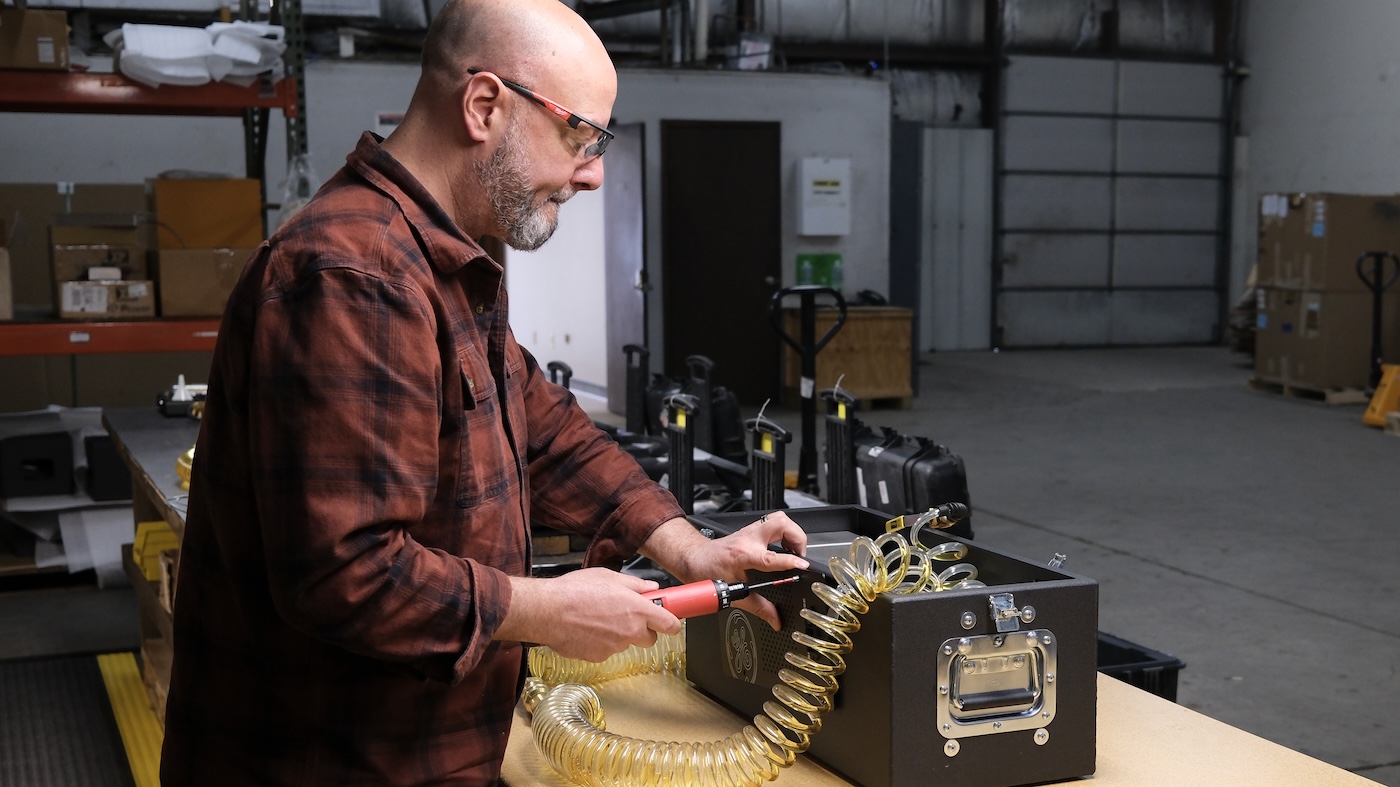
Summary. Contract assembly is the outsourcing of product assembly to a third-party manufacturer who integrates customer-supplied or internally produced components into finished or semi-finished units. This practice allows OEMs to offload labor-intensive, repetitive tasks and redirect internal resources to higher-value activities like machining, fabrication, engineering, and system-level builds.
Commonly outsourced assemblies include wiring harnesses, mechanical subassemblies, enclosures, and kitted modules. The right contract assembly partner brings documented processes, quality checks, and scalability—enabling improved consistency, quality, and lead times. Contrary to concerns, outsourcing doesn’t mean losing control; it often enhances it through standardized procedures and transparent workflows.
Cost advantages stem from shared overhead, better labor efficiency, and reduced rework or scrap. It also frees up valuable floor space for more profitable operations. OEMs should begin by outsourcing simple, time-consuming, non-core assemblies and select partners that offer integrated services (assembly, fabrication, logistics, inventory management) along with strong communication, engineering support, and industry experience.
Success is defined by lower labor costs, reduced inventory, improved margins, and fewer production delays. Ultimately, contract assembly improves operational focus, efficiency, and profitability while supporting flexibility in today’s dynamic manufacturing environment.
__________________________
Full Blog:
On a Tuesday morning in Milwaukee, the operations team at a mid-sized hydraulics OEM was gathered around a conference table staring at their production schedule. The KPIs for several projects were in the red for a variety of reasons, including labor inefficiencies, high rates of scrap and rework, and late deliveries, to name a few.
“We’re a hydraulic systems company,” the COO muttered with a tinge of frustration. “Why are we devoting so much time and resources to assembling wiring harnesses and bracket subassemblies to try to save a few bucks? Assembly is not a core part of our business, and there are other opportunities we should be exploring within our core competencies that would be much more profitable.”
This is an obvious and common question many OEMs are asking as they lose time, opportunity, and money on assembly work that could easily be outsourced.
As supply chains become more volatile and as customer expectations continue rising, more manufacturers are turning to contract assembly partners to streamline operations, protect their margins, and redirect their focus to more profitable business opportunities.
Contract Assembly: A Smart Path to Profitability for OEMs
What Is Contract Assembly?
Contract assembly refers to the outsourcing of the product assembly phase to a specialized third party—most commonly a contract manufacturer—who integrates the customer’s supplied components into a finished or semi-finished unit.
In many cases, the contract manufacturer may also fabricate or machine components in-house, but during contract assembly their primary role is integrating customer-supplied and/or internally produced parts into a finished or semi-finished unit.
Depending on the arrangement, the OEM may retain sourcing responsibilities or delegate them to the contract manufacturer to reduce administrative burden and improve supply continuity. By offloading labor-intensive, repetitive assembly work, the OEM can stay focused on higher-value operations and tasks such as machining, fabrication, system-level assembly, engineering, and new product development.
Common examples of contract assembly jobs include:
- Brackets and mechanical subassemblies
- Small steel or aluminum component builds
- Electrical or wiring subassemblies
- Enclosures containing hardware or electronics
- Kitted or pre-assembled modules prepared for final build
Contract Assembly Facts and FAQs
Not all contract manufacturing companies offering assembly services are the same. Some have very limited capabilities, while others are set up for high-end complex assembly projects. As with selecting any type of partner, you will need to do a fair amount of due diligence to ensure you select the best partner for your needs. When you find one that seems to be a good fit, visit their shop and meet with their team to see first-hand how they manage and execute assembly projects.
On with the FAQs…
Q: “Do we lose control if we outsource assembly?”
A: No. As a matter of fact, in most cases you gain control. A good contract assembly partner uses documented work instructions, quality checks, and standard processes that are tested and proven to optimize quality and efficiency. They will also be set up for repeatable, consistent production to help you scale.
Q: “Can a contract manufacturing partner handle variety or customization?”
A: Typically, yes. The right contract manufacturer will be set up to manage multiple versions of products through utilizing:
- Process documentation
- Revision-controlled documentation
- Standard operating procedures (SOPs)
- Process controls
- Visual aids and job aids
- Structured processes for engineering changes
- The proper tools
- A kitting system (bundling all needed parts together)
As long as you provide accurate documentation, the right contract manufacturing partner can handle variations.
Q: “Will costs be competitive?”
A: Typically, yes. Contract assemblers often spread overhead, labor, and equipment costs across many customers, making them more efficient at tasks that are labor-heavy but not technically complex. Good partners also provide:
- Transparent pricing
- Material cost updates
- Time studies
- Quarterly Business Reviews (QBRs)
Q: “What should we outsource first?”
A: It’s always a good idea to walk before you run. Start with assemblies that are:
- Time-consuming
- Simple
- Repetitive
- Not central to your product’s unique value
- Known to have chronic quality issues or high variation
- Taking up too much physical space that could be better utilized
- Creating bottlenecks or delays
Q: “What should we look for in a contract assembly partner?”
A: As mentioned earlier, no two contract assembly partners are alike. Look for a contract manufacturer that provides integrated services that support OEMs, including:
- Mechanical and electrical assembly
- Sheet metal fabrication or machining
- Finishing (powder coat, plating, anodizing)
- Inventory management and procurement
- Packaging and labeling
- Quality checks and test procedures
- Kitting services
- Logistics support
- Ready-to-install subassembly
Also focus on contract manufacturers that have the following attributes and qualities, such as:
- Engineering support
- Documented quality processes
- Experience in your industry
- Strong lines of communication
- Clean, organized assembly areas
- Program management
- The ability to easily handle engineering changes
- Transparent pricing practices
- Good references
- A genuine desire to help you achieve your goals
Q: “What does success look like?”
A: You’ll know you found a good contract manufacturing and assembly partner if they ask you how you define success based on your specific needs and requirements. Success can be defined in many ways, including:
- Lower labor costs
- More capacity for operations
- Reduced inventory
- Shorter lead times
- Fewer late orders
- Better customer satisfaction
- Higher manufacturing margins
- Fewer headaches
How Contract Assembly Improves Profitability
The financial benefits of outsourcing assembly go far deeper than simply moving work off your floor. Also think about:
The Cost of Labor Beyond Hourly Wages
Assembly work is labor-intensive, and aside from hourly wages, consider associated costs, such as supervision, quality checks, and facility costs, because they add up, fast.
As contract assemblers are set up for standardization, training, and efficiency, it often results in a lower per unit cost.
The Cost of Your Floor Space
Assembly work, which is typically lower margin work, requires a large amount of floor space that could be better utilized for more profitable activities, such as:
- Larger product builds
- Machining
- Welding
- Testing
Many OEMs outsourcing even some of their assembly work reclaim thousands of square feet for higher-value production.
The Costs of Inventory and Rework
Contract manufacturers offering assembly services operate with structured, repeatable processes that prevent issues from entering your production floor. They typically emphasize:
- Organized workflows
- Incoming inspection
- Consistent assembly methods
- Early detection of defects
- Accurate documentation
- Lot traceability
- Clean handoffs
These practices significantly reduce scrap and rework—two hidden costs that erode margins.
Improved Lead Times
Contract assemblers set themselves up to adapt to changing demand. They cross-train employees and adjust labor quickly to respond faster when schedules change or when customer demand spikes.
OEMs benefit from improved delivery performance after outsourcing certain assemblies.
Parting Thoughts: A Practical Path to Stronger Profit Margins
Contract assembly allows OEMs to work smarter and to focus on what they do best — engineering innovative products, managing system-level integration, and delivering high-value solutions to their customers.
Contract assembly isn’t about giving up control. It’s about improving efficiency and strengthening the operational health of an OEM’s entire operation.
About Mathison Manufacturing
Founded in 1959, Mathison Manufacturing is a trusted partner in precision contract manufacturing, specializing in tight-tolerance sheet metal fabrication, electromechanical assemblies, and complex, high-end solutions. Known for exceptional craftsmanship, responsive service, and a customer-first mindset, Mathison is dedicated to delivering quality products and building lasting partnerships that help customers grow.
Let’s work together on your next project! Contact us today!