
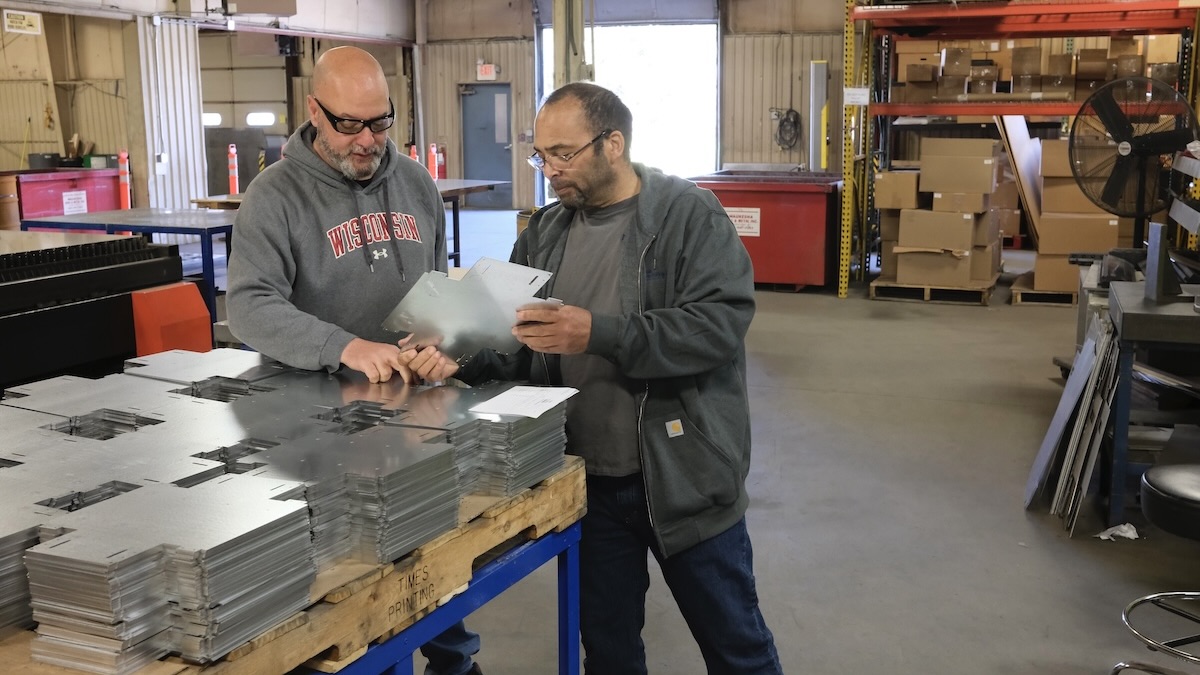
Summary. When customer demand increases, production bottlenecks can prevent OEMs from accepting new orders or meeting delivery deadlines. A qualified contract manufacturer can help by adding capacity where it’s needed, resolving design questions before production, adjusting quantities as demand changes, managing multiple production stages, and preparing for repeat orders.
Success starts with identifying what’s slowing production and defining the work a manufacturing partner will handle. Current drawings, clear quality requirements, available materials, and coordinated schedules help turn additional capacity into more completed products. Bringing fabrication, finishing, and assembly under one partner can also reduce coordination demands on your team.
Read the full blog to explore five practical ways contract manufacturing can help your business respond faster—and prepare before your next customer needs more, sooner.
Imagine an equipment manufacturer whose customer is opening another facility.
The customer needs more equipment and asks the original equipment manufacturer (OEM) to increase its next order and deliver sooner.
It’s an opportunity to strengthen the relationship and earn future business, but production is already fully booked.
The welding department is working overtime. Several existing orders need the same fabricated frames. Final assembly could handle more equipment, but only if those frames arrive sooner.
Moving the new order ahead in the schedule could delay other customers’ shipments. Hiring welders or purchasing equipment might support future growth, but neither solves the immediate problem. Declining the order could send the customer elsewhere.
A qualified contract manufacturer could take over frame fabrication to clear the welding bottleneck, while the OEM keeps final assembly and testing in-house.
Making this work requires clear drawings, available materials, agreed quality requirements, and a coordinated schedule. Preparing before demand increases gives the OEM more options.
If you’ve faced a similar situation, the first step is pinpointing what’s slowing you down. From there, five practical approaches can help you prepare for changing demand and respond more quickly.
Identify what is slowing production
Before adding capacity, identify what prevents your team from meeting customer demand. The problem may involve equipment, staffing, scheduling, or incomplete production information.
Common signs your operation is struggling to keep pace include:
- Overtime increasing while unfilled orders continue to accumulate.
- Assembly teams waiting for fabricated components.
- New product launches competing with existing orders for equipment and employees.
- Production stopping while employees clarify drawings or resolve engineering changes.
Understanding the cause helps determine where a contract manufacturer can provide useful support.
Five ways contract manufacturers help you respond faster
The right contract manufacturing partner helps address specific issues delaying your orders. Together, you can organize the work so added capacity leads to more completed products.
- Adding capacity where you need it
An overloaded fabrication department can delay an otherwise achievable schedule. Outsourcing suitable work can provide additional capacity without waiting for new equipment or employees.
Where to start:
- Identify the operation holding up finished products.
- Confirm the supplier can support every required production stage.
Look beyond the first operation. Faster cutting provides little benefit if parts still wait for welding, finishing, or inspection.
- Resolving questions before production starts
Production stalls when a supplier needs to stop and ask questions. A design for manufacturability (DFM) review prevents this by resolving unclear details and identifying features that could complicate production before work begins.
Where to start:
- Share current drawings, material specifications, and quality requirements.
- Review tolerances, hardware, finishes, and how parts fit together.
For custom sheet metal fabrication, this review can uncover forming or assembly concerns and addressing them early reduces avoidable rework. You’ll need to approve any proposed design changes before production begins.
- Adjusting production quantities as demand changes
Customer demand may increase for one product while remaining steady for another. Contract manufacturers can help plan production around those differences.
Where to start:
- Separate confirmed orders from forecasts.
- Agree on batch quantities, delivery dates, and how much notice changes require.
Short-run production can help avoid building excessive inventory when demand remains uncertain. However, smaller batches can increase setup costs. Discuss the cost and delivery trade-offs before choosing an approach.
- Bringing more production steps under one partner
Managing separate suppliers for fabrication, finishing, and assembly adds work for your team and creates more opportunities for things to go wrong. Each handoff requires scheduling, transportation, and communication, and a delay at one supplier can affect every step that follows.
A contract manufacturer like Mathison Manufacturing can manage several production stages, reducing that burden and keeping work moving toward a shared delivery date.
Where to start:
- Identify which fabrication, finishing, and assembly tasks one partner could manage.
- Confirm who will oversee scheduling, quality, and delivery across those tasks.
Instead of coordinating each supplier yourself, you have one company responsible for the agreed scope. Receiving completed subassemblies also gives your employees more time for final assembly, testing, and other production needs.
- Preparing for the next order
Repeat orders can run more smoothly when both companies already understand the requirements. Keep approved production information current and discuss expected demand regularly.
Where to start:
- Maintain approved drawings, inspection requirements, and clear controls for design changes.
- Agree on material purchases and identify who will resolve urgent production or delivery issues.
If a supplier purchases materials in advance, decide who pays for anything you don’t use. That preparation supports faster delivery while clarifying costs if demand falls short.
How this could work in practice
Return to the equipment manufacturer in the opening example. Its welding backlog limits shipments, even though final assembly has room for additional work.
In this hypothetical situation, the OEM qualifies a contract manufacturer to produce the frames. Both companies review drawings, confirm inspection requirements, and arrange deliveries to match assembly needs. They also check finishing capacity before promising delivery dates.
The goal is to ship more completed equipment without expanding the OEM’s welding department. The arrangement succeeds when frames that meet specifications arrive on schedule and existing customer orders stay on track.
Frequently asked questions
The right arrangement depends on your products and production needs. These questions can help guide the discussion.
How do we decide what to outsource and what to keep in-house?
Start with the work that limits your output, such as a fabrication step with a growing backlog. Keep the operations that define your product’s performance or protect your proprietary know-how, like final assembly and testing. Then clearly define what your supplier must deliver.
How quickly can a contract manufacturer start?
Timing depends on materials, documentation, tooling, capacity, and required approvals. Ask for a schedule that accounts for each.
Will outsourcing eliminate inventory?
No. Some materials may require advance purchases to support your schedule. Agree on who purchases, owns, and stores them.
What should we include in a request for quote (RFQ)?
Provide current drawings, quantities, materials, finishes, quality requirements, and requested delivery dates. Clearly distinguish confirmed orders from forecasts.
How do we know the arrangement is working?
Track delivery performance, quality, and completed-product output. Also review whether your team spends less time expediting orders and resolving production problems.
Start with one production problem
You don’t need to outsource an entire product line. Begin with a specific issue and a clearly defined scope.
To evaluate the opportunity internally:
- Select a product family with recurring delays.
- Identify what causes those delays.
- Compare your needs with a qualified supplier’s capabilities.
For help evaluating your options, discuss your drawings, expected quantities, and delivery requirements with Mathison Manufacturing. Together, you can identify where contract manufacturing could support your operation.
Preparing now gives your business more options when the next customer needs more, sooner.
__________________________
About Mathison Manufacturing
Founded in 1959, Mathison Manufacturing is a trusted partner in precision contract manufacturing, specializing in tight-tolerance sheet metal fabrication, electromechanical assemblies, and complex, high-end solutions. Known for exceptional craftsmanship, responsive service, and a customer-first mindset, Mathison is dedicated to delivering quality products and building lasting partnerships that help customers grow.
Let’s work together on your next project! Contact us today!