
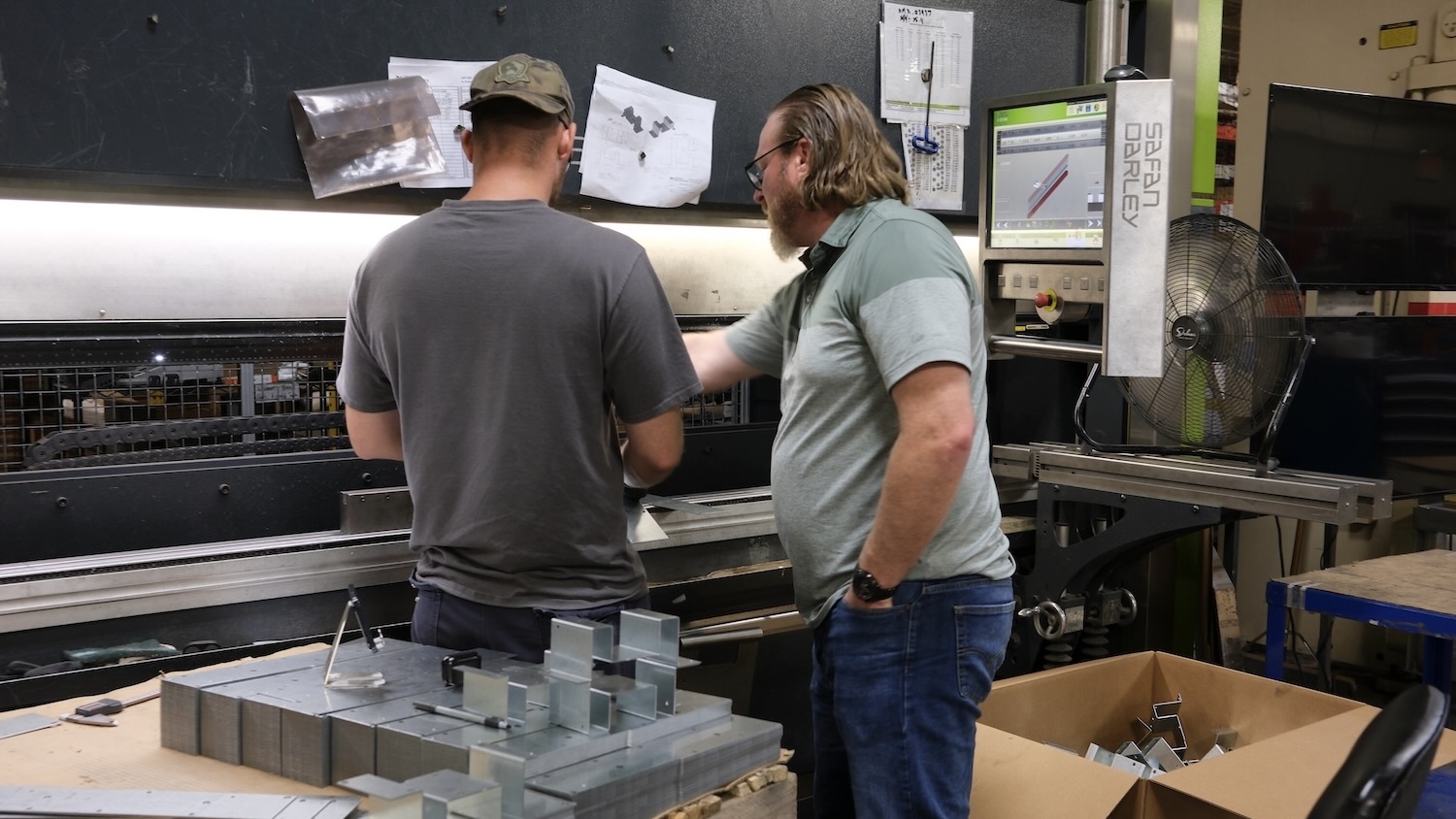
Summary. This is the story of a complex idea brought to life through collaboration and creative engineering. It begins with a rough sketch of a surgical device housing that seemed impossible to manufacture. But when the customer partnered with a reputable precision contract manufacturer, they embarked on a journey from concept to production, overcoming design hurdles, material challenges, and tight tolerances through iterative prototyping and design-for-manufacturability (DFM). Along the way, every prototype, every team discussion, and every problem solved brought the customer’s vision closer to reality. Through value engineering and cross-functional input, the contract manufacturer turned a complex concept into a refined, cost-effective product that performed perfectly in the field.
Read the full blog to learn how choosing the right engineering partner can make the seemingly impossible possible.
__________________________
Disclaimer: The following story is a fictional representation based on real challenges contract manufacturers help solve every day. All names and scenarios are illustrative.
Full Blog:
When Neil, a senior product designer at a medical device manufacturer, was sketching a concept for a new surgical equipment housing on his notepad, he knew it wouldn’t be easy to manufacture.
The compact enclosure needed to withstand repeated sterilization, integrate seamlessly with touch sensors, and include intricate internal brackets, all within very tight tolerances. When Neil shared his sketch with several of his colleagues, they all thought it would be too complex to manufacture.
Neil, stubborn and wanting to prove everyone wrong, was determined to make his concept work. He had been through numerous product launches and knew that with the right contract manufacturer, he could turn his vision into a reliable component. He reached out to Jordan, the lead mechanical engineer at a precision contract manufacturer that specialized in tight-tolerance sheet metal fabrication and electromechanical assemblies.
When Jordan opened Neil’s email and saw the sketch, he got on a Zoom with Neil to walk through the concept in detail.
“Okay,” Jordan said. “We can make this work, but we’ll need to engineer it from the ground up to make it manufacturable. We’ll get it done.”
What makes a good engineer?
As Neil’s initial drawing lacked complete dimensions and left several material and finish details open-ended, he needed to work with an engineer who saw possibilities instead of roadblocks. Where one contract manufacturer told Neil they needed a finished print before it could be quoted, Jordan seemed to take on personal ownership of the project, determined to make it work.
Jordan and his team treated the sketch as the starting point for a collaborative design for manufacturability (DFM) review and walked through every feature: bend locations, cutouts for sensors, gasket interfaces, and mounting patterns. Jordan identified areas that might cause problems on the laser or press brake and suggested ways to simplify the part without altering the device’s function.
The design was fine-tuned: bend radii were adjusted to match existing tooling, a corrosion-resistant stainless-steel grade was selected to avoid plating and support long-term corrosion resistance, and fastener choices were standardized to reduce assembly complexity.
Neil witnessed his original concept evolve into a manufacturable product that could easily and consistently be produced with no compromises to quality or functionality.
Prototypes That Perform
Once the updated model was complete, Neil green-lighted Jordan’s team to proceed into rapid prototyping. Using in-house laser cutting, CNC punching, and press brake forming, Jordan’s team produced the first physical version of the enclosure.
Neil flew in to see how the enclosure ran through each stage, from forming to PEM insertion to light welding. The prototype felt solid in Jordan’s hands when he slid it into the mating chassis. It aligned with the touch sensors almost perfectly.
Almost.
During a fit check, Jordan discovered that one internal mounting tab was slightly misaligned due to tolerance stack-up from multiple bends. Sam, the quality engineer, adjusted the bend sequences, updated the flat pattern, and added a key inspection point to catch any variation. The second prototype was a perfect fit.
Cross-Functional Collaboration – The Critical Step
As the prototypes improved, Neil was impressed at how well the entire team worked together, almost as if Jordan’s entire team thrived on the challenge and process.
Neil was invited to sit in on the build review. Around the table were representatives from engineering, production, quality, and supply chain, each analyzing the enclosure from different angles. The goal was to ensure Neil’s part would run smoothly and efficiently in production and perform reliably in the field.
As they walked through each step of the process, a concern was raised around sterilization cycles. The enclosure would face repeated high-temperature, high-moisture conditions in hospital environments. Tasha, the sourcing manager, pointed out that the originally specified fasteners would not hold up under such intense conditions over time and proposed an alternative stainless self-clinching (PEM-style) fastener better suited for repeated sterilization and cleaning.
Next, Sam outlined a practical control plan. He identified critical-to-function dimensions, set cosmetic checkpoints, and defined a sampling strategy balancing risk with efficiency. The team also aligned on material certifications and inspection documentation to support traceability. On the shop floor, welders shared their thoughts on joint design, fixturing, and controlled weld sequencing to minimize distortion, ensuring that the sealing surfaces and sensor locations stayed within spec.
This cross-functional collaboration turned a risky design into a manageable project, ensuring the part would work in the real world.
When the Tolerances Are Tight and the Stakes Are High
Neil’s project required high-stakes performance requirements: the touch sensors needed precise spacing, cable routing had to clear sharp edges, and the outer shell required ingress protection to keep fluids out during cleaning and washdown.
Jordan’s team modeled how each forming operation would affect critical dimensions. They chose tooling that minimized springback, and they validated their assumptions with actual measurements from prototype runs. Certified welders built sample assemblies using fixturing and controlled weld sequencing to ensure weld heat wouldn’t distort the sealing surface.
Inspection data from the prototypes fed directly back into the CAD model. Jordan’s team tightened tolerances where needed and relaxed others where the design allowed, striking a balance between performance and manufacturability. When the production release was approved, both teams were confident the part would perform to expectations in the field.
Value Engineering: Reducing Cost Without Compromising Function
When preparing for production, Jordan raised one more opportunity: value engineering. He and Neil reviewed the bill of materials, laser nesting layouts, and process steps.
They got creative.
They converted a two-piece welded bracket into a single formed component to eliminate several welds and associated inspections. A non-critical interior finish was updated to a more economical option that still met performance requirements. Lastly, material utilization on the flat pattern was improved with a small redesign of one flange.
Together, they reduced overall cost and shortened lead times without sacrificing quality, function, or durability. A clear sign of a strong partnership.
From Concept to Production – Lessons for OEM Teams
Months later, when the first production lot of enclosures shipped to their assembly line, Neil paused to compare one of the finished units to his original sketch. The essence of the design was the same, but the path it took to get there had transformed how he thought about manufacturing the supposedly impossible.
Key Takeaway (FAQs)
This story serves as a perfect example of how choosing the right contract manufacturer and metal fabrication partner is critical for your business and operation. While some shy away from projects that seem too complex or difficult, a reputable contract manufacturer and metal fabricator will gladly take on the work and do whatever it takes to make their customers happy. These types of partners can be hard to find.
With Mathison Manufacturing’s customer-centric mindset and diverse expertise and capabilities, we help solve even the toughest sheet metal challenges through early collaboration and iteration.
…
Q: Why does choosing the right contract manufacturer matter for complex metal parts?
A: Because not every shop will take on challenging work. The right partner, unintimidated by complexity, helps refine the design, and finds a practical path to production.
Q: How do I choose a contract manufacturer or metal fabrication partner for a difficult project?
A: Look for a team that gets involved early, offers design-for-manufacturability feedback, and has experience with tight-tolerance sheet metal assemblies.
Q: How should I use prototypes when working with a contract manufacturer?
A: Treat each prototype as a learning tool. Use each to understand real-world behavior: tolerance stack-up, assembly fit, and material response, and then refine the design.
Q: Is engineering expertise just about knowing standards, tools, and formulas?
A: No. It’s also about mindset: curiosity, creativity, and a willingness to iterate. The best engineers ask, “How can this work?” instead of finding a reason something won’t work.
Q: Can a design that seems “impossible to manufacture” really be produced?
A: Often, yes, if you work with a manufacturing partner that’s willing to engineer with you. Early collaboration, smart prototyping, and cross-functional input can turn an “impossible” sketch into a repeatable solution.
__________________________
About Mathison Manufacturing
Founded in 1959, Mathison Manufacturing is a trusted partner in precision contract manufacturing, specializing in tight-tolerance sheet metal fabrication, electromechanical assemblies, and complex, high-end solutions. Known for exceptional craftsmanship, responsive service, and a customer-first mindset, Mathison is dedicated to delivering quality products and building lasting partnerships that help customers grow.
Let’s work together on your next project! Contact us today!